The Art of Making Small Spaces Feel Larger
You’re well aware of the difficulty if you reside in a small home in Delhi NCR. Although the living room is the focal point of your house, it also requires the greatest maintenance despite being the smallest space. It serves as your entertainment zone, hosting space, home office corner, and place to unwind.
The good news is that renovating a small room doesn’t have to cost a fortune to make it appear and feel larger. It involves making more intelligent decisions on layout, lighting, colour, and furnishings. Even the smallest living room can be made to appear spacious, light, and effortlessly fashionable with these proven tips designed especially for Indian homes.
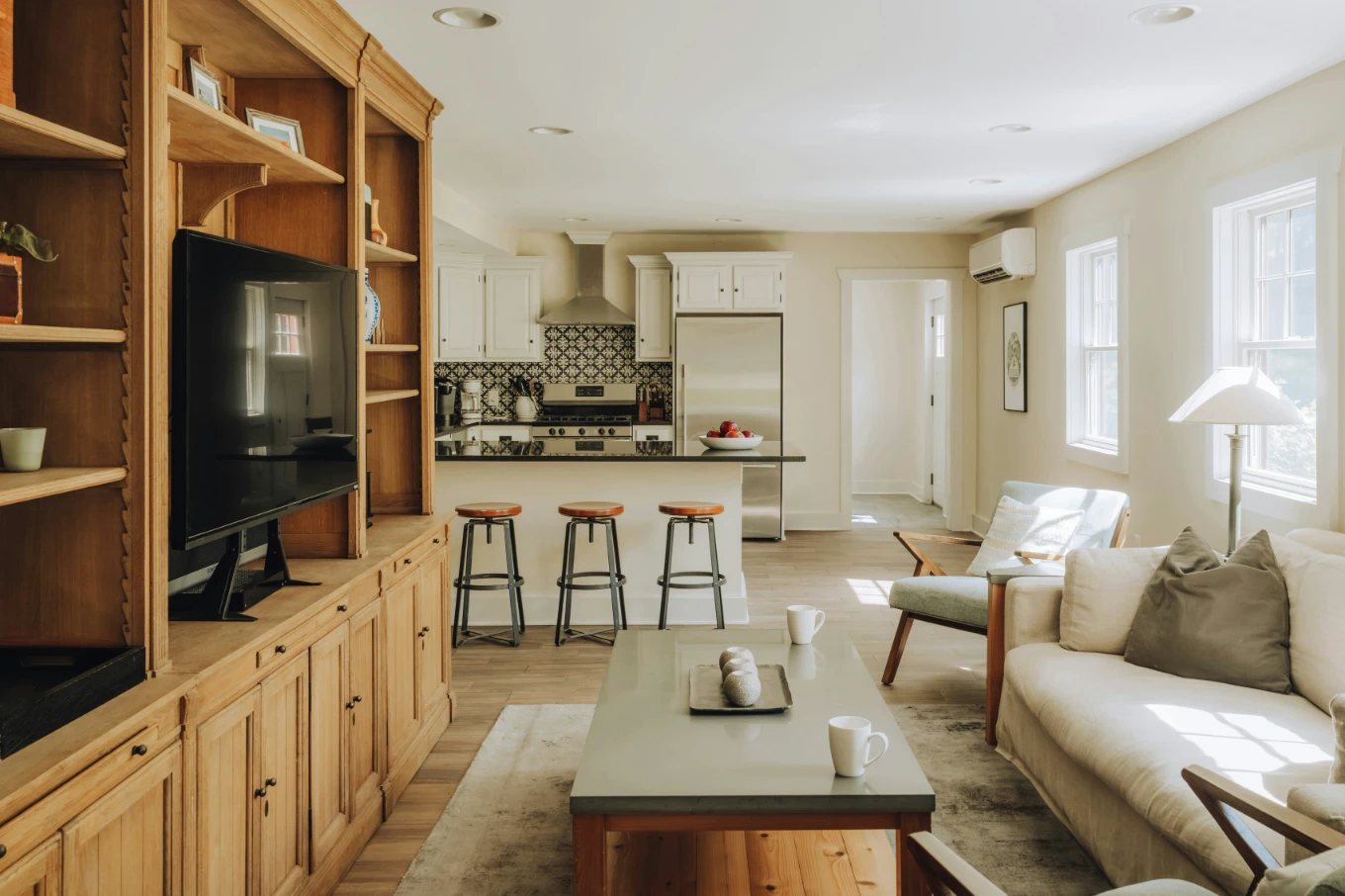
Tip 1: Choose Furniture That Does More Than One Job
In a small living room, each piece of furniture must justify its position. A piece is taking up space it cannot afford if it only serves one purpose. Furniture that can be used for two or three purposes at once is the answer.
The ottoman stool is the perfect example. It serves as a footrest, additional sitting for visitors, a side table when a tray is placed on top, and a decorative accent piece all at once. It saves you at least three square feet of floor space in a small living room by eliminating the need for an additional side table, chairs, and footrest.
Tip 2: Keep Your Furniture Low and Streamlined
This is one of the oldest interior design tricks. Rooms appear larger and ceilings are raised with low furniture, such as couches, coffee tables, and ottomans that are closer to the floor. The eye moves across the room rather than being halted by big, heavy objects.
Keeping your primary furniture pieces under 80 cm in height gives Indian homes with typical ceilings of 9 to 10 feet an air of openness that quickly expands the space. Steer clear of chunky armrests, high-backed chairs, and tall bookcases that obstruct sightlines throughout the space.
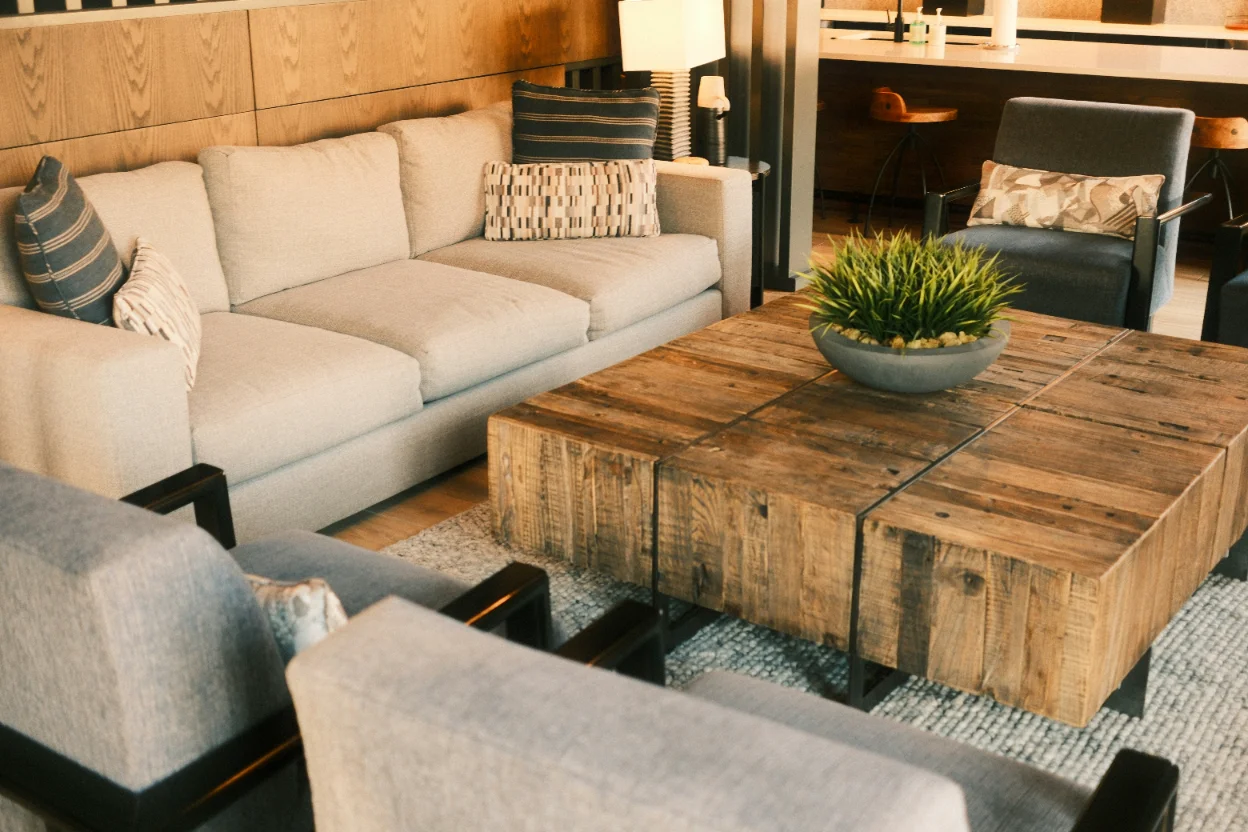
Tip 3: Use Light, Warm Colours on Walls
Dark walls provide a sense of enclosure by absorbing light. Light-reflecting walls create an air of openness. It’s not difficult, but the light colour has a big impact.
The finest wall colours for tiny spaces in India living rooms in 2026 are warm whites, soft ivory, pale terracotta, and warm greige (grey-beige). These hues produce an airy, expensive sensation while brilliantly reflecting the warm Indian sunlight without the coldness of stark white or the heaviness of deep tones.
- Warm White: The safest and most widely used option
- Ivory or Cream: It is warmer than white and looks great with wood furniture
- Pale Terracotta: It’s popular in 2026 and offers warmth without enclosing the space
- Warm Greige: It is a sleek, contemporary colour that complements every type of furniture.
Tip 4: Maximize Natural Light
The most effective way to make a tiny space feel larger is through natural light, which costs nothing. However, with thick curtains, furniture positioned in front of windows, and dark surfaces that absorb rather than reflect light, the majority of Indian homes unknowingly block it.
Easy modifications that have a significant impact:
- Swap out heavy drapes for sheer or light linen curtains to allow light to pass through while preserving privacy.
- Tall furniture should never be positioned directly in front of windows as this will obstruct light and cast a dark shadow.
- Installing a mirror on the wall across from your window quickly doubles the room’s perceived light.
- Select light-coloured carpets and furniture that reflect light rather than absorb it.
Tip 5: Keep the Floor Visible
The more floor is visible, the larger the room is. This may seem straightforward, yet the majority of people do the exact opposite. They cover every inch of floor space with rugs, furniture, and storage until the floor essentially vanishes.
Select furniture with legs over pieces that rest flat on the floor if your living space is small. A coffee table on a visible frame, an ottoman on legs, or a sofa on legs all reveal the floor beneath and produce an airy, spacious feeling that is impossible for furniture without legs.
If you opt to use a rug, make sure it covers the majority of the seating area or leave the floor completely bare. A little rug in the centre of the room actually makes it feel smaller by visually breaking up the room.
Final Thoughts
A small living room is a design challenge that should be embraced rather than a problem that needs to be solved. Compact homes are among the world’s most exquisite and livable. The decisions you make can make all the difference between a small space that feels claustrophobic and one that is cozy and thoughtful.
Furniture size, wall colour, and natural light are the adjustments that will have the most effects. Next, add the details, such as multifunctional pieces, vertical space, and deliberate styling. More square footage is not necessary. You need wiser choices.

